

In the project Participatory Identity Research Kwaku, we explored together with Amsterdam Southeast and its residents how the identity of the festival can be sustainably preserved and strengthened. For fifty years, Kwaku has been a collectively cherished initiative rooted in the community itself; a place of meeting, celebration, and pride. With that growth came new challenges: how can the festival stay true to its origins while also becoming future-ready?

The district approached us with a clear question: How do we preserve the cultural identity of Kwaku while the festival continues to evolve in a changing urban context? In practice, several tensions surfaced: between neighborhood and administration, between accessibility and regulation, between commerce and community. For many in Southeast, Kwaku is more than just a festival. The challenge was to make this social meaning tangible, so that policy and organization can build on it in a structural way.
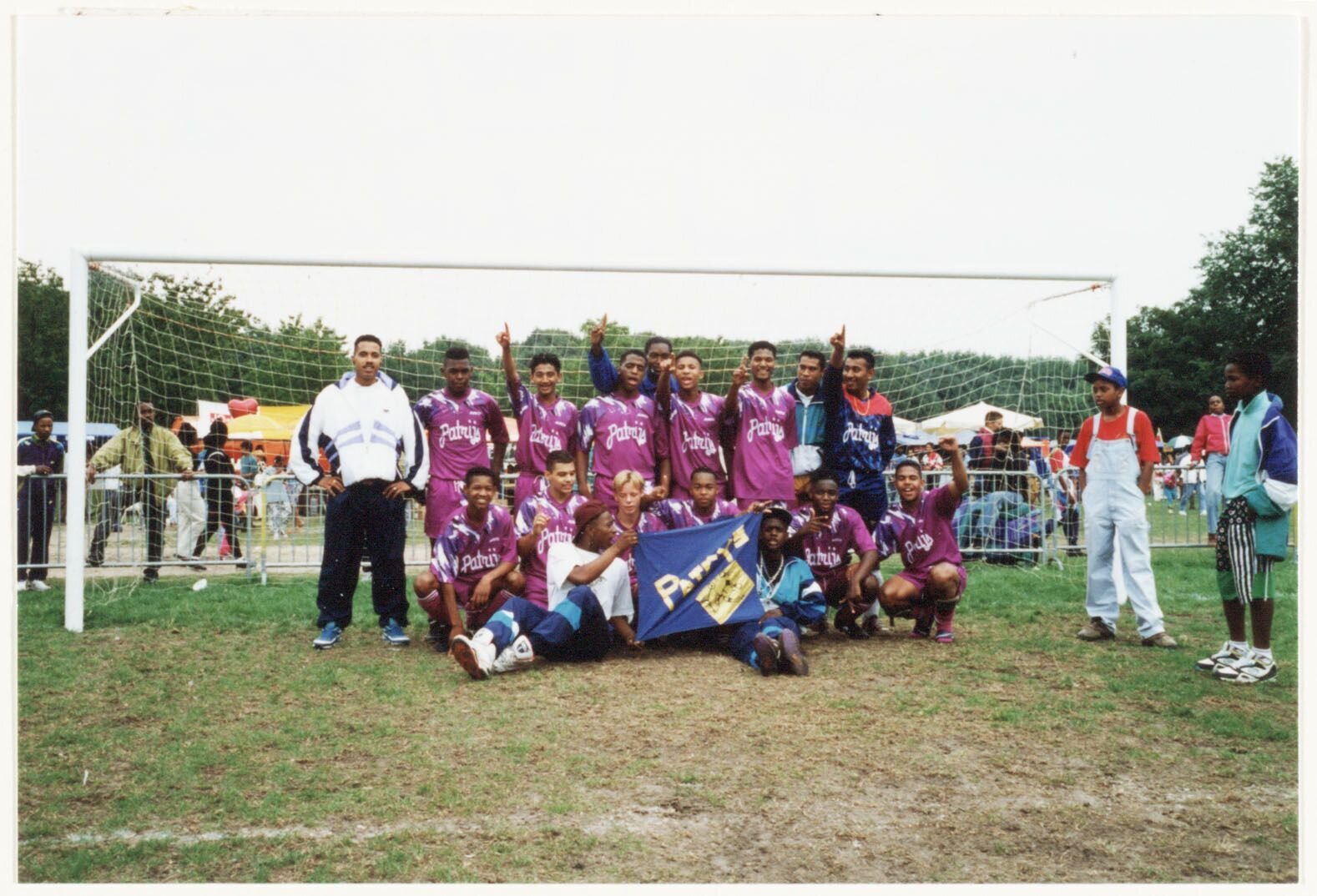
We held conversations with residents, visitors, vendors, artists, and the organization itself. We conducted fieldwork during the festival, spoke with key figures across generations, and distributed a broad survey. From these conversations, a rich picture emerged of what Kwaku means today, and what is at stake. It became clear that the festival plays a unique social role for people in Southeast. And precisely because the festival originated from the community itself, there is a deep sense of ownership. This insight led to a new question: How can Kwaku continue to grow on its own terms, while preserving its social meaning and local roots?
Through a participatory research process, we gathered stories, observations, and data from multiple sources: fieldwork during the festival, in-depth interviews, a focus group with residents and key figures, and conversations with the organization. The results were distilled into a set of themes and design principles that show what Kwaku means today and what it needs for tomorrow. The final outcome is a shared vision for the future of Kwaku, based on five values with both social and administrative significance. These values were translated into concrete principles and guiding questions for policy, organization, and funding. We also designed a proposal for structural community involvement that protects the identity and values of the festival and keeps an ongoing dialogue with policy and organization. The report offers a realistic future perspective in which policy, administration, and community share responsibility for Kwaku.
We designed a process and conceptual framework that bridges the gap between policy and community. This included:
This process made visible how social design can contribute to renewing cultural institutions by designing together with the community.
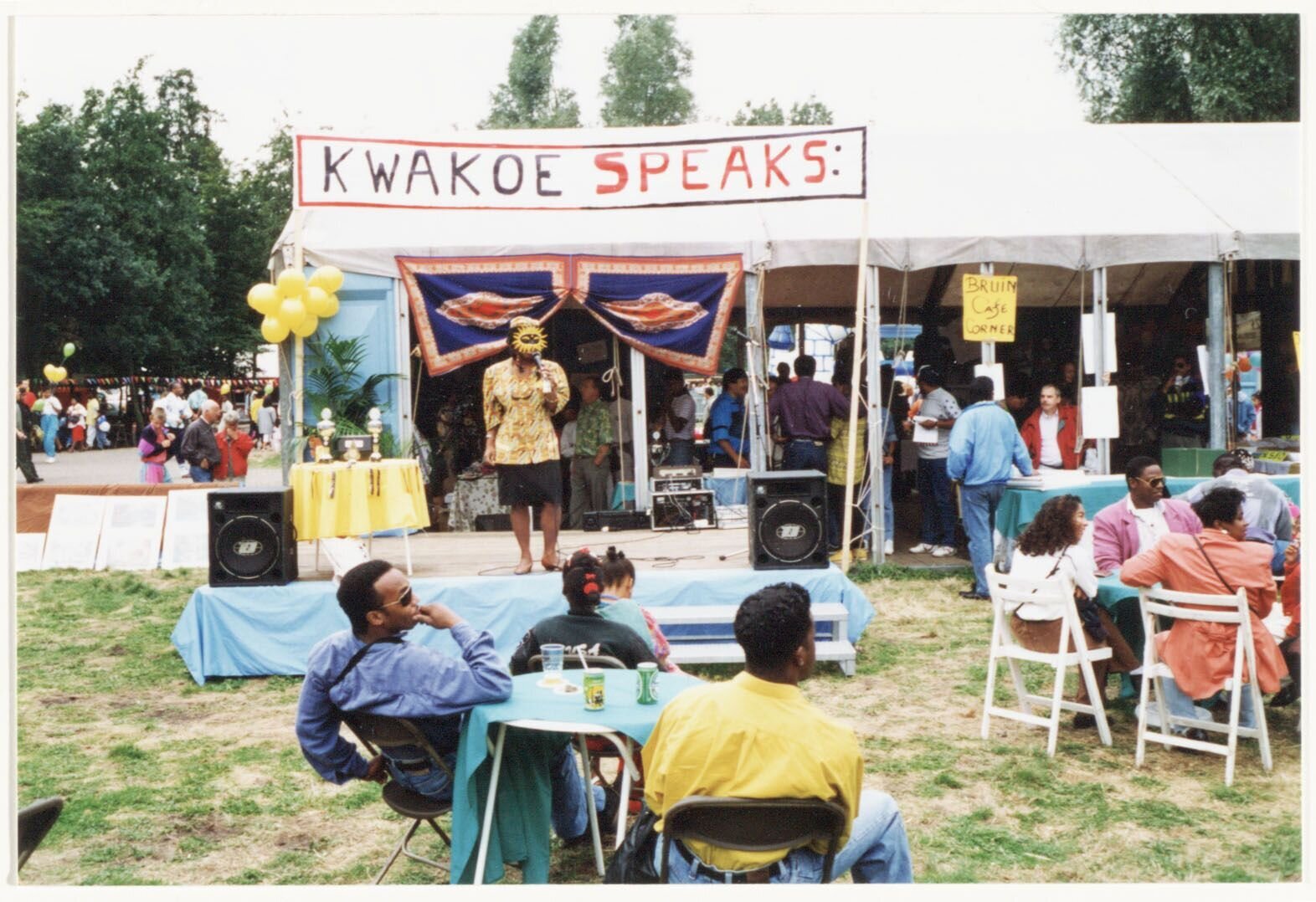
The results and tools support the district in making decisions that honor the festival’s values and the people who uphold them.
Finally, the research has shown that when community, policy, and design work together, solutions emerge that reach beyond the boundaries of the original assignment.
Photos: Amsterdam City Archives/Doriann Kransberg


