

Fair practice is high on the agenda in the cultural sector, but translating it into day-to-day reality remains a challenge. Especially at the local level, the question of what this concretely requires from municipalities, institutions, and makers often goes unanswered. On behalf of the municipality of Zeist, we researched how the Fair Practice Code is experienced and applied within the local cultural field, and what role the municipality can play in accelerating the transition.

The municipality of Zeist wants to promote fair and sustainable working practices in the cultural sector. The Fair Practice Code is an important starting point for this, but it was still unclear how this code is experienced and applied in practice by institutions and makers in the municipality. We were asked to bring this into focus and to explore what role the municipality can play in accelerating the transition to fair practice.

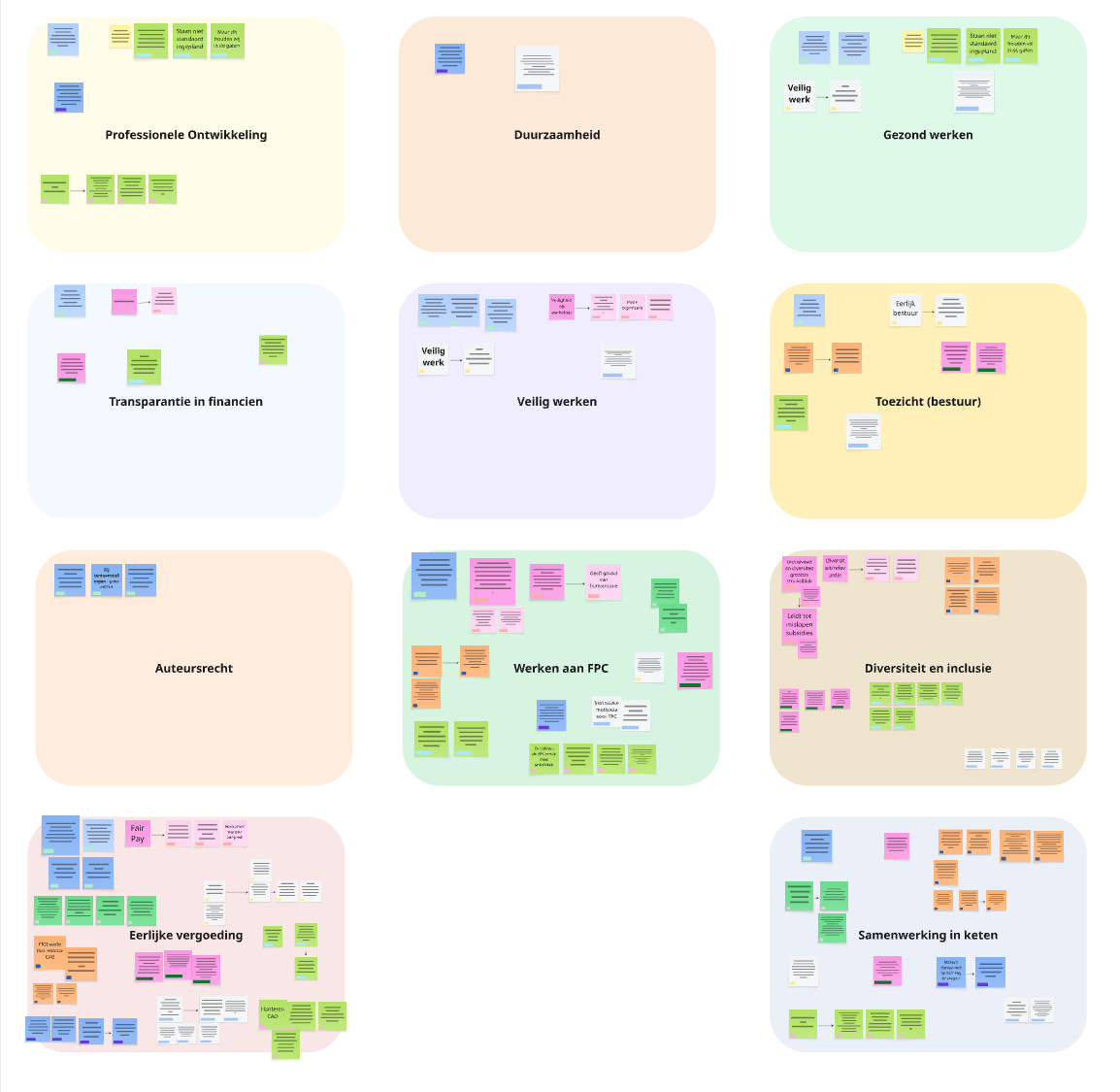
We conducted in-depth interviews with a broad group from the cultural field in Zeist: independent makers, small and larger institutions, spread across sectors such as art, music, media and festivals. In these conversations, we explored how they experience the Fair Practice Code, what challenges they face, and what they need to put it more fully into practice. We also built on insights from our earlier research into the code. The motivation to work fairly turned out to be widely present. The challenges lie mainly in feasibility: the code feels large and abstract, and smaller organisations in particular don’t know where to start. The focus is mostly on fair pay, while themes such as professional development and healthy and safe working conditions tend to lag behind. Freelancers often feel like the weaker party in collaborations, with little room to discuss fair conditions. At a system level, the subsidy landscape strongly steers towards artistic output and less towards sustainable business operations. Another important insight is the connection between fair practice and diversity. When fair pay is lacking, the sector becomes inaccessible to people without a financial safety net. This hinders the influx of new and diverse talent. Lastly, the municipality is not experienced as a collaborative partner. Contact is mainly seen as financial and accountability-driven, which limits the shared responsibility for fair practice.
Based on these insights, we formulated recommendations for the role the municipality can play. The core message: money alone does not solve the issue. Without system-level interventions, additional funding mainly leads to more production. We advised the municipality to provide clarity within subsidies about fair practice, to organise practical support, and to facilitate knowledge sharing through tools and Fair Practice Labs. We also recommended that the municipality take on a connecting role by bringing parties together and making fair practice a structural topic of conversation.
We translated the insights and recommendations into a visual summary, including an introduction to the Fair Practice Code. This makes the results easy to share and discuss within the municipality and the cultural field.
The research gives the municipality of Zeist a clear picture of what is going on and what steps it can take. The municipal council has also shown interest in the theme, and we are exploring how they can be further involved in the topic. In this way, fair practice becomes a shared responsibility in which the municipality also takes an active role.
"The research has given us valuable qualitative insights, some already familiar and some new, that we as a municipality can definitely build on." — Municipality of Zeist


