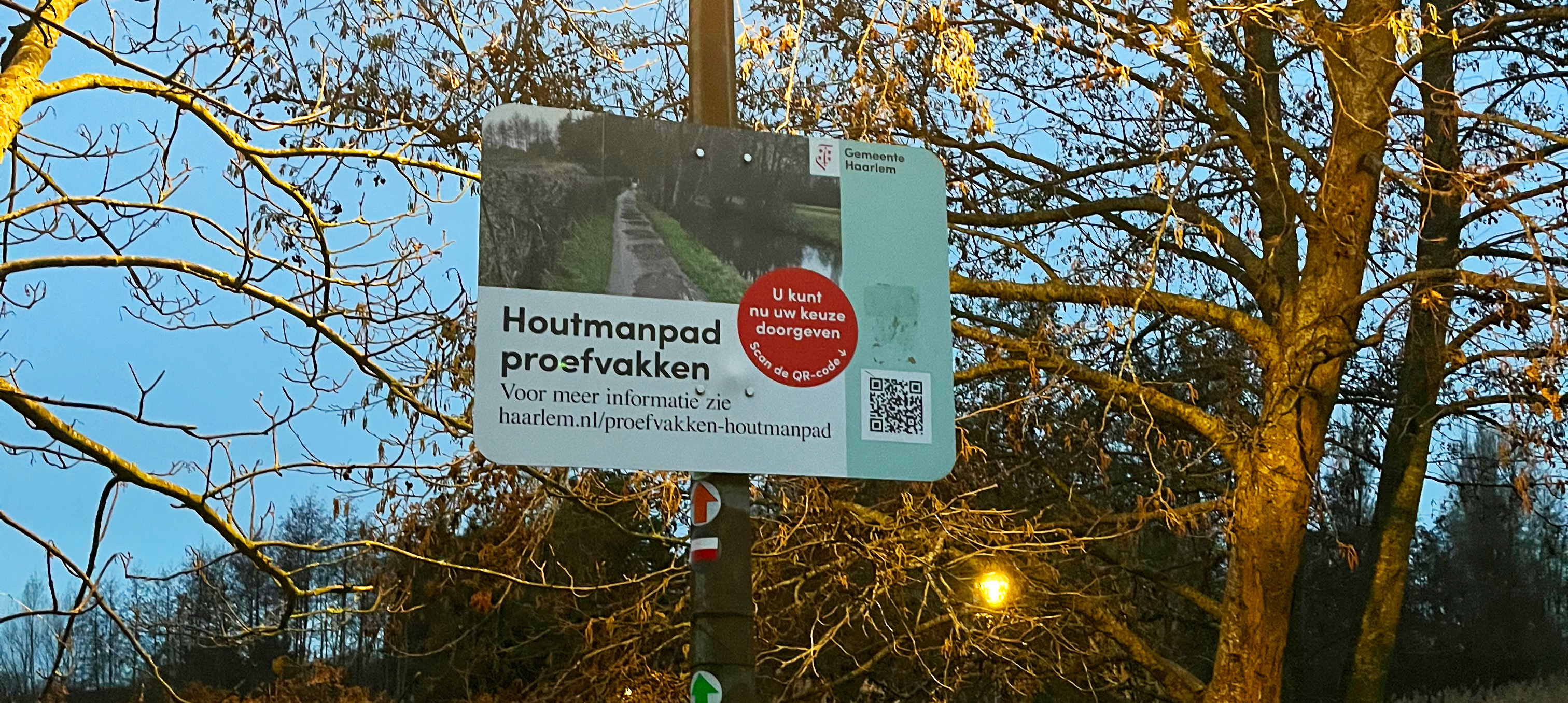
I am not a landscape architect. I know nothing about costs, maintenance, or what is good for the environment. But I come here almost every day, and I do know that every morning dozens of children cycle past on their way to school while parents with pushchairs walk in the other direction. I know that after heavy rain, even the paved path floods completely. That kind of knowledge from people who use a place daily is exactly what a municipality needs to make good decisions. But it is not what is being collected right now.
Participation is about asking the right question
Residents are not experts in materials or ecology. They are experts in what it is like to live somewhere, to work there, to bring their children to school. That experiential knowledge is valuable, but only when you ask for it in a focused way. Good participation therefore starts with a clear policy question: what should this input deliver, and for whom? Only then do you decide which people you want at the table, how you reach them, and at what point in the process their input will make the most difference.
That sounds logical, but in practice this is often where things go wrong. Participation is brought in too late, rolled out too broadly, or aimed at groups that are already easy to reach. The usual suspects show up, and everyone else is missed. The outcome is rarely directly usable for policy.
From conversation to policy
Gathering input is one thing. Translating it into concrete policy choices is a specialism in its own right. It requires working methods that allow people to feel safe and taken seriously, so that different perspectives genuinely come to the surface. It also requires formats that make complex issues understandable and turn contributions into something policymakers can actually use.
At Ink Social Design, we combine design expertise, insights from behavioural science, and years of experience with participation processes for municipalities, provinces, and area developers. From developing a participation strategy to facilitating sessions and translating outcomes into policy-relevant insights. We make sure the right people are at the table, at the right moment, with the right questions.
The sign at the Houtmanpad has since been removed. The puddles, unfortunately, have not. But it does show what happens when participation is not applied well: time and money are spent, without delivering anything useful for residents or for policy.
Want to know how things can be done differently? Get in touch at emma@ink.team